
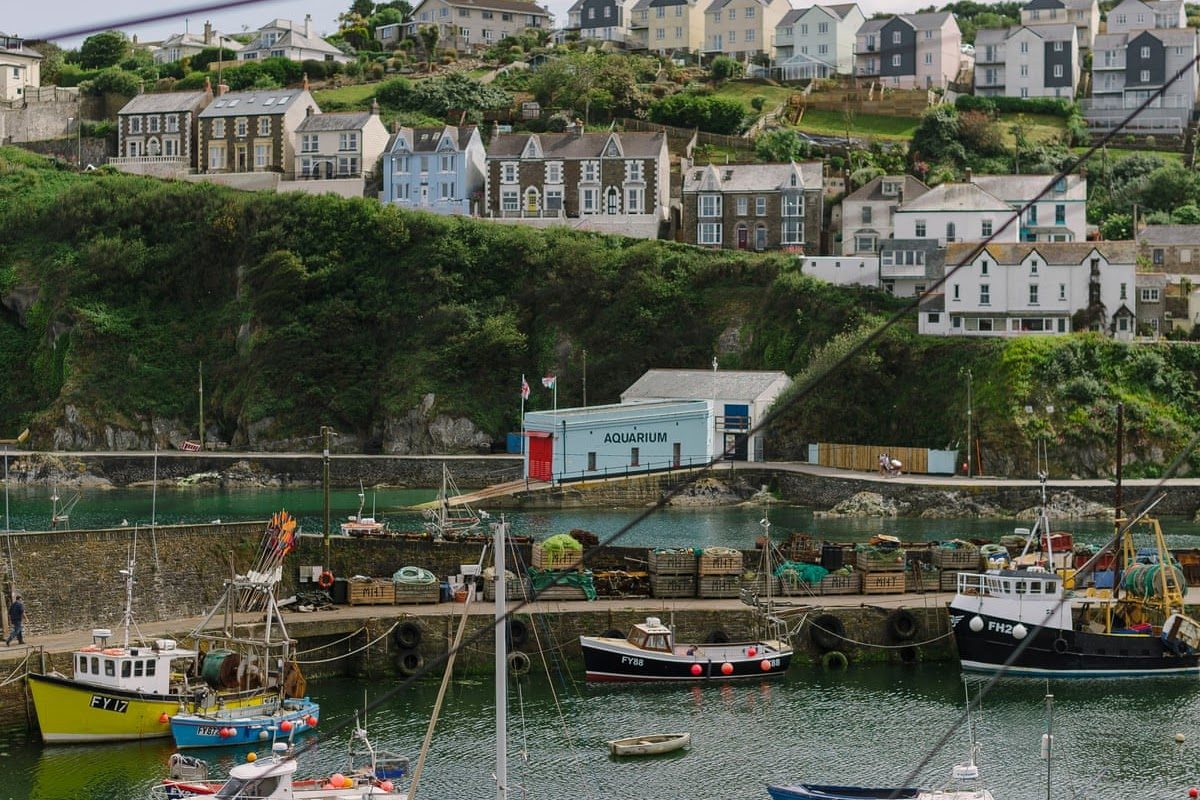
Mevagissey, a Cornish fishing harbour
Mevagissey is a working fishing village on the south Cornish coast, about six miles south of St Austell on the B3273. Leave the car at the top of the village, walk down to the harbour, and use it as a base for the rest of the bay: the beach and valley trail at Pentewan, the gardens at Heligan, the coast path to Gorran Haven and the Dodman, and the ferry over to Fowey.
Planning a day in Mevagissey
Start with the practical bits: where to leave the car, how the harbour fits together, and what there is to do once you are on foot. Each has its own page.
A base for St Austell Bay
Mevagissey sits in the middle of a stretch of coast that belongs together: fishing coves to the south, the old clay ports to the north, and a ferry across the bay to Fowey. These are the places a day out from here usually reaches.
The harbour after dark
The guide also tells the village the long way round, in the voices of four people who could have worked this quay: the night watchman, the fishlighter's wife, the pilchard seller and the smuggler. Start at the map and follow a story.
Start anywhere
Every pin is a page. The map is the menu for people who would rather look than read a list.
The village year, and the long one behind it
This is the history — the thousands of years that made the village. For the recurring year a visitor can plan around — the festival, the fishing seasons, the choir on the quay — see The year in Mevagissey.
The year in Mevagissey →Settlers take the valley. Their burial mounds still stand on the cliffs south of the village, and the hill fort ruins on Camp Hill with them.
The age of the saints. Two settlements — Lammorick, and Porthhilly, a fishing community.
Fishing alone no longer puts bread on the table. Smuggling is rife, with Roscoff the primary stop.
The Harbour Trust rules are written in the Ship Inn, and bound not in cow leather but in the skin of a ling.
The inner harbour is built under the new Act. An outer harbour follows in the next century and takes the worst of the storms off it.
The modern Feast Week is devised — music, fish, exhibitions, flora dances and choirs.
And the tales
The village keeps two other kinds of story, and is honest about which is which.
A working village, not a set
Mevagissey is unusual in that the fishermen own the seabed around the harbour, which is normally the Duchy's. The village is a place of work first and a view second, and the guide is written that way.
Around the harbour, where it would normally belong to the Duchy of Cornwall.
Mevagissey printed its own bank notes at one point.
One of the first villages in Britain to light its streets by electricity.